


Pair Cupworks
#145 Sugarcane Decaffeinated Wash-Processed Coffee Beans from Colombia
#145 Sugarcane Decaffeinated Wash-Processed Coffee Beans from Colombia
Couldn't load pickup availability
Need the taste but not the shakes?
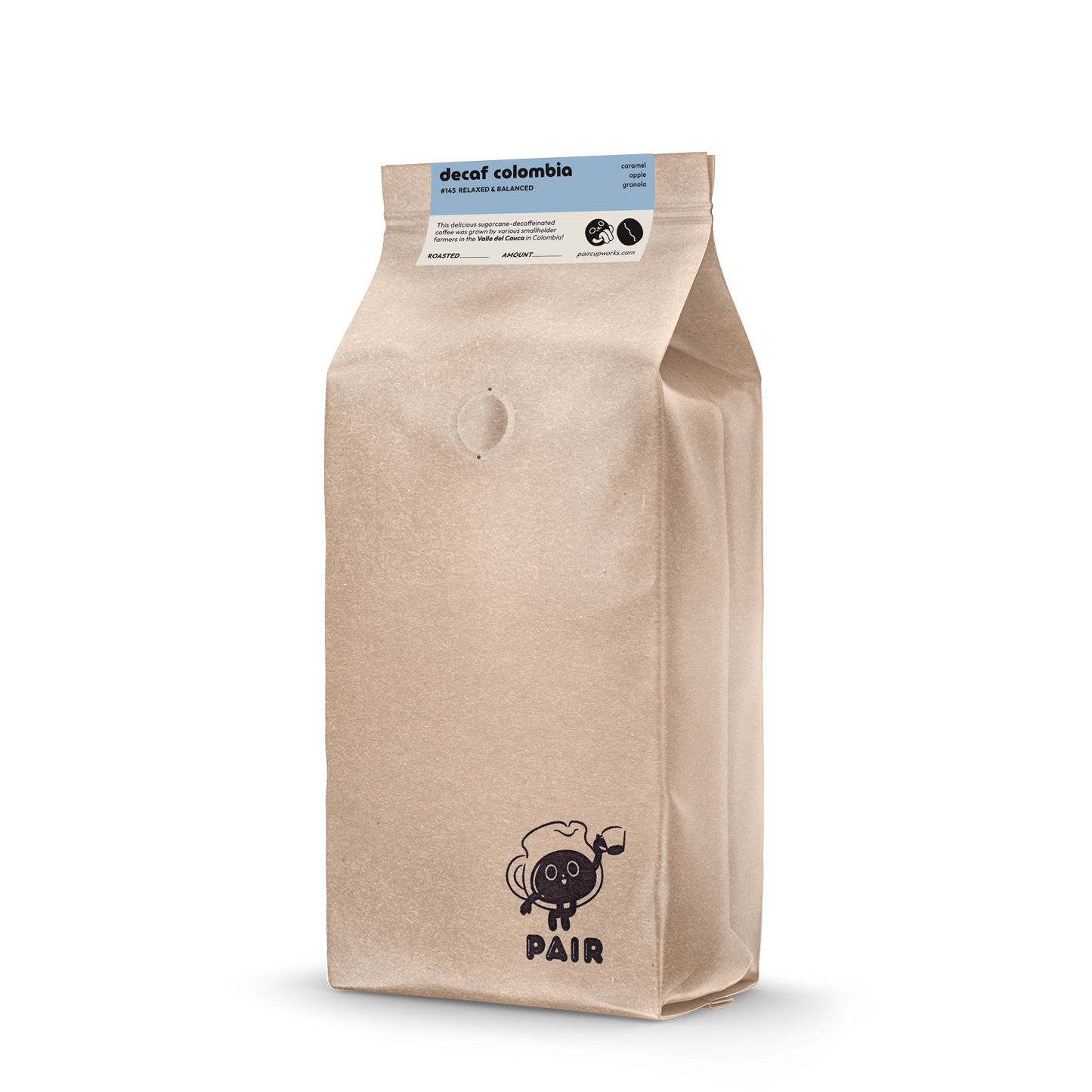
Apple, Caramel, Granola! -- This delicious sugarcane-decaffeinated coffee was grown by various smallholder farmers in the Valle de Cauca in Colombia!
This coffee will come with a random sleeve from our limited art sleeve run!
- Origin: Region Valle del Cauca, Colombia
- Elevation: 1750 masl
- Varietal: Caturra, Castillo
- Growers: Various Smallholders
- Process: Wash-processed
- Decaffeination: EA sugarcane decaffeinated
- Roasted by Pair Cupworks
From our green coffee supplier:
Valle del Cauca Coffee Beans
The Valle del Cauca is a critical swatch of land where natural resources, water management, and friendly environmental practices are keenly preserved by those who live and farm there. As one of Colombia’s two main biological conservation corridors, Cauca Valley is home to World Heritage-listed national parks, wildlife, and water sources that give life to the surrounding land.
The region lies between the National Park of Tatama and “Serrania de los Paraguas”, a recognized Coffee Cultural Landscape and UNESCO World Heritage Site where producers and organizations are committed to agroecology farming and community-based ecotourism. The altitude spans 1,700 to 2,100masl, and the surrounding mountains enclose the valley in a stable microclimate all year round.
Sugarcane Decaf Process
Sugarcane is readily available in Colombia, and its application to the coffee industry was a game-changer. Ethyl acetate is an organic compound found in sugarcane, and the decaffeination process begins with the fermentation of molasses derived from sugarcane to create ethanol. This alcohol is then mixed with acetic acid (the main component of vinegar) to create the compound ethyl acetate.
In a direct solvent-based process, low-pressure steam opens the pores of the coffee beans. Then the beans are soaked in a solution of water and ethyl acetate. The solvent binds to the salts of chlorogenic acids and allows the removal of caffeine. After flushing the beans with ethyl acetate repeatedly, up to 97% of the caffeine is extracted. Because ethyl acetate comes from sugarcane and is an organic compound that can effectively remove caffeine, the coffee’s flavor attributes are not extracted. Learn more about decaf coffee beans here.


Is it sold out?
Sign up for our newsletter for to hear about new releases and restocked items! 👇